.webp)
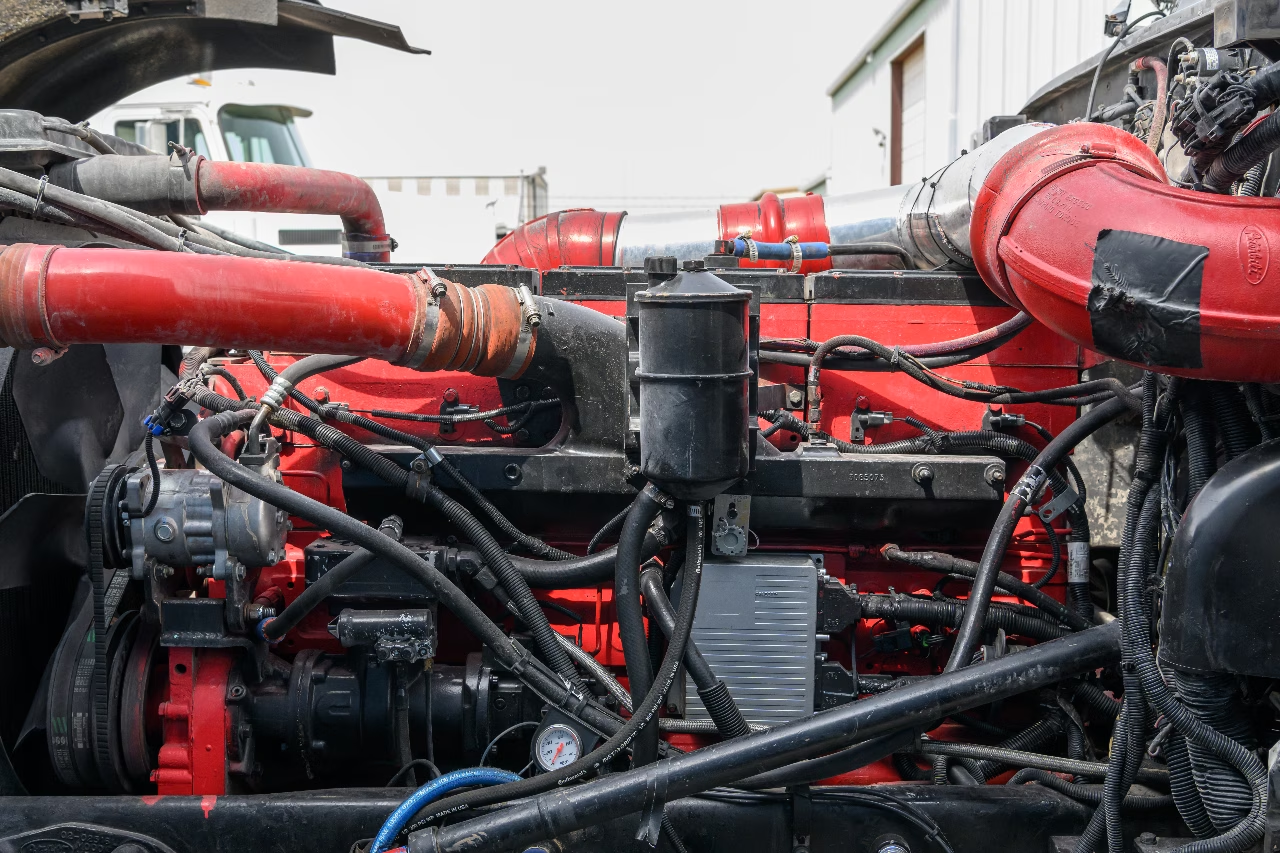
Are You Using the Right Oil and Fluids in Your Diesel Truck
Are You Using the Right Oil and Fluids in Your Diesel Truck
Walk into any parts store, and the fluid aisle alone can send your head spinning. Rows of motor oil, coolant, transmission fluid, and hydraulic fluid, each with its own spec ratings, viscosity grades, and compatibility warnings.
For a diesel truck owner or fleet manager, making the wrong call here isn't just a minor inconvenience. It can quietly cause serious internal damage over thousands of miles before any symptoms show up.
Getting fluid selection right is one of the simplest and most impactful things you can do for the long-term health of a diesel truck. Here's what actually matters.
Why Engine Oil Precision Matters
Engine oil is the most frequently discussed fluid in any diesel, and for good reason. It lubricates moving parts, helps manage heat, suspends contaminants, and protects against wear. But not all engine oils are created equal.
Heavy-duty diesel engines require oil that meets specific API (American Petroleum Institute) and ACEA standards. For most modern diesel trucks, you're looking at CK-4 or FA-4 rated oils. Here's the practical difference:
- CK-4 oil works across a wider viscosity range and suits older and newer engines alike
- FA-4 oil is formulated for select newer engines running tighter tolerances and is not backward compatible
Using FA-4 in an engine not designed for it can reduce film strength and lead to accelerated wear. Always cross-reference the manufacturer's spec before making a switch.
Viscosity Grade Matters Too
The numbers on a bottle of diesel engine oil, like 15W-40 or 10W-30, describe how the oil flows at different temperatures. The "W" stands for winter. A lower first number means better flow in cold conditions.
In West Texas heat, 15W-40 is a common and reliable choice for most applications. However, if your truck runs in colder climates or sees extreme temperature swings, a 10W-30 may offer better cold-start protection. Check the OEM spec first, then factor in your operating conditions.
The Importance of Coolant For Diesel Trucks
Coolant, also called antifreeze, does more than prevent freezing. It regulates engine temperature, prevents corrosion inside the cooling system, and protects the water pump and radiator from scale buildup.
The problem is that not all coolants are compatible with one another, and mixing them is a common mistake that causes more harm than running low.
There are three main types used in heavy-duty applications:
- IAT (Inorganic Additive Technology): Older formula, requires more frequent change intervals
- OAT (Organic Acid Technology): Longer service life, common in modern diesel trucks
- NOAT (Nitrite OAT): Adds nitrite protection specifically for wet sleeve cylinder liners, which are common in heavy-duty diesel engines
If your diesel truck uses wet sleeve liners, NOAT coolant is typically the correct choice. Using a standard OAT without nitrite protection in those engines accelerates a problem called cavitation erosion, where tiny bubbles collapse against the liner wall and pit the metal over time.
Transmission Fluid: Don't Guess on This One
Automatic and manual transmissions in heavy-duty trucks have very different fluid requirements, and even within automatic transmissions, specifications vary by manufacturer.
Allison transmissions, common in vocational and heavy-duty trucks, require TES 295 or TES 668 spec fluid. Using a generic ATF (automatic transmission fluid) that doesn't meet those specs can cause shift quality issues, clutch pack wear, and shortened transmission life.
For manual transmissions, the spec is often a specific gear oil viscosity, typically 50-weight or a 75W-90. Check the service manual, not just the label on whatever's nearby on the shelf.
DEF: Simple Product, Critical Importance
Diesel Exhaust Fluid, or DEF, isn't a lubricant, but it's just as important to keep right. DEF is a precisely mixed solution of 32.5% urea and 67.5% deionized water. It feeds the Selective Catalytic Reduction system that reduces nitrogen oxide emissions.
The quality and purity of DEF matter more than most people appreciate:
- Contaminated DEF can damage the SCR catalyst and injector
- DEF stored in direct sunlight or extreme heat degrades faster
- Never mix DEF with any other fluid or store it in non-approved containers
Running low on DEF triggers warning lights and, on most modern trucks, will eventually derate the engine. Keep levels topped off and buy from reputable sources that meet ISO 22241 standards.
Hydraulic Fluid
Trucks running hydraulic equipment, whether a dump body, lift gate, or PTO-driven system, need hydraulic fluid matched to the specific system requirements. Using a multi-purpose hydraulic oil when the system calls for a specific AW (anti-wear) grade can affect pump efficiency and seal compatibility.
Check the hydraulic system manufacturer's spec. It usually lists an ISO viscosity grade, commonly ISO 46 or ISO 68, depending on the application and operating temperature range.
A Simple Rule Worth Following
When in doubt, go back to the OEM specification. Manufacturers test these systems extensively with specific fluid formulations, and those recommendations exist for good reason. Generic or "compatible with everything" claims on fluid labels are marketing, not engineering.
A few practical habits help keep fluid choices on track:
- Keep a maintenance log with the exact products used at each service
- Never top off with a different product than what's already in the system
- When switching fluid brands or types, do a full drain and flush first
Use the Right Fluids & Protect Your Investment
Fluid selection in a diesel truck is one area where small decisions carry long-term consequences. The right diesel engine oil, correct coolant type, properly spec'd transmission fluid, quality DEF, and matched hydraulic fluid all work together to keep systems running the way they were designed to.
Alpha Diesel Services takes fluid specs seriously on every service we perform. If you're unsure what your truck actually needs, bring it in and we'll go through it with you properly.
For more on keeping your diesel truck running strong, check out our article on DPF cleaning vs replacement.
Contact Us
Get in touch with Alpha Diesel Services in Midland & Odessa, Texas today to schedule the services you require, or for more information on how we can help!


Shops
Odessa: 11056 W Kassnar Dr, Odessa, TX 79764 United States
